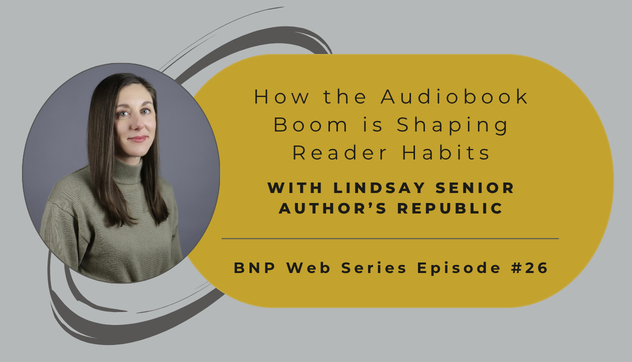
June is Audiobook Appreciation Month, making it the perfect time to explore one of the fastest-growing segments of publishing. As audiobooks continue to gain momentum across genres and audiences, they are reshaping how readers discover, consume, and engage with books.
In this episode of the B&N Press Web Series, we sit down with Lindsay Senior, Head of Marketing at Authors Republic, to discuss the evolving audiobook landscape, changing listener habits, and what indie authors should know before investing in audio.
With years of experience helping authors produce, distribute, and market audiobooks, Lindsay shares practical advice on everything from narration and discoverability to metadata, libraries, and emerging trends shaping the future of audio publishing.
Key Takeaways
● Audiobooks remain one of publishing’s fastest-growing formats, with strong growth across genres and age groups.
● Discoverability in audio differs from ebooks. With fewer titles competing for attention, indie authors often have more opportunities to reach new audiences.
● Libraries play a critical role in audiobook discovery, helping readers find new authors and series.
● Strong narration is essential. A compelling narrator can significantly impact listener engagement, reviews, and long-term success.
● Audiobook listeners are highly loyal and frequently engage with books across multiple formats, including ebooks and print.
● Metadata matters. Accurate categories, keywords, and series information improve discoverability across retailers and library platforms.
● AI narration continues to evolve, but human narrators remain the gold standard for performance, storytelling, and listener satisfaction.
● Authors should understand audiobook production requirements and technical specifications before beginning the production process.
Watch the Full Episode
Full Transcript
Julie: Hello everyone, and welcome. Today we’re discussing one of the fastest-growing areas of publishing: audiobooks. As more readers embrace audio, authors have new opportunities to expand their reach, connect with audiences, and diversify their publishing business.
To explore this topic, I’m joined by Lindsay Senior, Head of Marketing at Authors Republic. Lindsay works directly with authors and publishers to help maximize audiobook distribution, discoverability, and sales.
Lindsay, thank you so much for joining me.
Lindsay: Thank you for having me. Authors Republic has had a long-standing relationship with Barnes & Noble Press, so it’s wonderful to be here.
Julie: To start, can you tell us a little about Authors Republic and the role it plays in the audiobook ecosystem?
Lindsay: Authors Republic is an audiobook distribution platform that helps independent authors and publishers distribute their audiobooks to a global network of retailers, libraries, and streaming services.
In addition to distribution, we offer production resources, narrator connections, marketing tools, and customer support. Our goal is to be a one-stop shop for authors looking to enter the audiobook market.
Julie: What does the audiobook production and distribution process typically look like for indie authors?
Lindsay: It begins with deciding whether audio is the right format for a particular book. Once that decision is made, authors either produce the audiobook themselves, hire a narrator, or work with a production studio.
After the audiobook is completed, including narration, cover art, and metadata, it can be submitted for distribution. We review the files to ensure they meet technical specifications before delivering them to retailers and libraries worldwide.
Julie: Is there anything that surprises authors about the audiobook process?
Lindsay: Many authors underestimate how different audiobooks are from ebooks and print books. Production takes time, narration quality matters tremendously, and there are additional technical requirements to consider.
At the same time, discoverability can actually be stronger in audio because there are fewer titles competing for attention compared to ebooks.
Julie: That’s an interesting point. How has listener behavior changed over the last several years?
Lindsay: We’ve seen tremendous growth in audiobook consumption, driven by streaming services, subscription platforms, and increased accessibility.
Listeners are also consuming content across formats. Someone may discover a book as an ebook, then listen to the audiobook, or move between formats during the same reading experience.
Julie: What trends are you seeing among audiobook listeners today?
Lindsay: Romance, fantasy, mystery, and thriller remain strong performers, with romantasy continuing to see significant growth.
We’re also seeing increased adoption among younger audiences. Children are growing up with audiobooks as part of their daily lives, whether they’re listening independently or reading along with a physical book.
Julie: How are listeners discovering audiobooks today?
Lindsay: Discovery increasingly happens through digital platforms, recommendation algorithms, editorial merchandising, and libraries.
Libraries are especially important because they often introduce readers to a new author or series. Once listeners discover a title through a library, they frequently seek out additional books through retailers or subscription platforms.
Julie: For authors looking to expand their audience, what opportunities does audio create?
Lindsay: Audiobooks allow authors to reach readers who may not engage with other formats. They’re also an effective way to diversify revenue streams and create additional touchpoints with loyal fans.
Many readers now expect books to be available in ebook, print, and audio formats, so having an audiobook can strengthen an author’s overall publishing strategy.
Julie: What role do metadata and discoverability play?
Lindsay: Metadata is critical. Accurate keywords, categories, series information, and descriptions help retailers and libraries surface books to the right audiences.
Small details can have a significant impact on discoverability, particularly in algorithm-driven environments.
Julie: Let’s talk about the listening experience itself. What separates a memorable audiobook from an average one?
Lindsay: Narration is everything. Listeners decide very quickly whether they want to spend hours with a narrator’s voice.
A strong narrator brings the story to life, conveys emotion effectively, and creates an immersive experience that keeps listeners engaged.
Julie: AI narration is becoming a bigger topic in publishing. How do you view its role in audiobooks?
Lindsay: AI narration is evolving rapidly and can offer a lower-cost entry point for some authors.
However, human narration remains the gold standard. Professional narrators bring emotional depth, nuance, and storytelling expertise that AI has not yet replicated.
Julie: Looking ahead, where do you see the audiobook industry going next?
Lindsay: Audiobooks have firmly established themselves as a mainstream format. I expect continued growth internationally, greater experimentation with formats such as multicast narration, and even stronger integration between ebook and audiobook experiences.
Readers increasingly want flexibility in how they consume stories, and audiobooks will continue to play a major role in that future.
Julie: If an indie author is considering producing an audiobook this year, what’s the one piece of advice you’d leave them with?
Lindsay: Do your research before you begin. Understanding production requirements, technical specifications, and distribution options upfront will save a tremendous amount of time and frustration later.
Julie: Lindsay, thank you so much for joining us and sharing your insights.
Lindsay: Thank you for having me.
Julie: And thanks to everyone for watching. We hope this conversation helps you better understand the opportunities audiobooks offer and inspires you to explore audio as part of your publishing journey.
Editor’s Note: This transcript has been edited for clarity, length, and readability while preserving the intent and substance of the original conversation.


