Julie Braunschweiger:
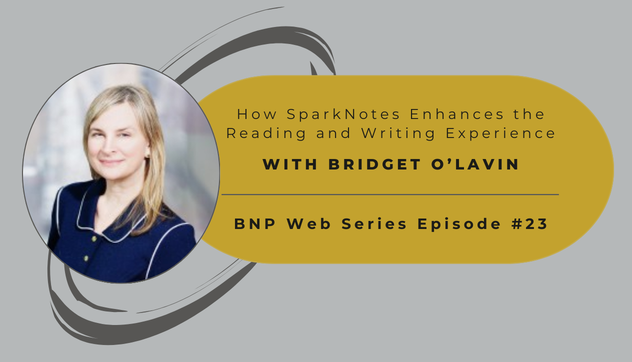
Hi everyone, and welcome. I’m Julie Braunschweiger, Senior Manager for B&N Press, and I’m excited to have you here for today’s conversation on how SparkNotes enhances the reading and writing experience.
Today’s discussion is for both passionate readers and independent authors. We’ll be exploring how breaking down literature can help readers engage more deeply with books and how those same insights can help writers better understand storytelling.
I’m thrilled to be joined by Bridget O’Lavin. Bridget, you are the Senior Director of SparkNotes, with more than twenty years of experience building products and platforms that support education and learning. Before leading SparkNotes for the past eight years, you spent nearly a decade at Oxford University Press. It’s clear that education and literacy are more than just a career focus for you.
Bridget, thank you so much for being here.
Bridget O’Lavin:
Thank you so much for having me. I’m really looking forward to the conversation.
Julie:
To start, for anyone who may only know SparkNotes from school, could you give us a quick overview of what SparkNotes is today and how the platform is being used?
Bridget:
Absolutely. SparkNotes provides learning support resources for students, teachers, and lifelong learners. We’re best known for helping make classic literature and Shakespeare more approachable through our study guides and No Fear translations.
But we’ve expanded quite a bit. We now cover newer novels as well as subjects like history, philosophy, and film. We also offer teaching tools, test prep materials, and premium content through SparkNotes Plus.
Julie:
SparkNotes is known for helping readers break down complex texts into something more accessible. What do readers typically come to SparkNotes looking for?
Bridget:
Readers generally come to us looking for a better understanding of what they’re reading. Books can be intimidating, especially when they involve complex structure or themes.
We help readers analyze not just what’s happening, but how and why an author is communicating their ideas. Questions like why a certain tone was chosen, what motivates a character, or what a specific moment means within the larger narrative.
Julie:
Are readers mostly looking for summaries, or are they exploring deeper ideas within the story?
Bridget:
It’s really both. Readers often want to confirm they’re understanding the plot correctly, but they also want to dig into themes, symbolism, and character development.
Our guides provide both summaries and deeper analysis so readers can engage with the material in whatever way they need.
Julie:
One of the things SparkNotes does especially well is highlight themes, motifs, and character arcs. From your perspective, what storytelling elements show up again and again in the most enduring works of literature?
Bridget:
Two key things stand out. First, well constructed characters that feel real and relatable. Second, a compelling conflict that draws readers in and keeps them engaged.
Those elements are what make readers want to keep turning the page.
Julie:
For writers watching today, what are some lessons they can take from classic works?
Bridget:
One important lesson is not to be afraid of writing complex or even unlikable characters. Those are often the most interesting.
Another is that stories don’t need to rely on shocking twists to be effective. Some of the most memorable stories are built on strong structure and thoughtful execution rather than constant surprises.
Writing is both an analytical and emotional process. You need structure to guide the reader, but you also need that emotional connection to really pull them into the story.
Julie:
What do you think separates stories that endure from those that don’t?
Bridget:
The stories that last are the ones we identify with. Even if they were written hundreds of years ago, we can still see ourselves in the characters and themes.
That relatability is what keeps stories relevant and why we continue to revisit them through new adaptations and interpretations.
Julie:
Are there themes that consistently resonate across generations?
Bridget:
Absolutely. Themes like identity, coming of age, love, and loss show up again and again because they are part of the shared human experience.
Readers connect with these stories because they reflect something true about their own lives.
Julie:
How can writers use SparkNotes as a tool to improve their craft?
Bridget:
Our goal is to show not just what was written, but how and why it was written that way. That gives writers insight into an author’s intentions and techniques.
Writers can use that understanding to approach their own work more deliberately and thoughtfully.
Julie:
With so many digital tools available today, how do you see platforms like SparkNotes shaping the future of reading and writing?
Bridget:
Readers and writers today have access to more resources than ever before, which is incredibly valuable. At the same time, it can be overwhelming.
What we focus on is creating high quality, reliable content that people can easily access and apply to their own reading or writing goals.
Julie:
Before we wrap up, what advice would you give to aspiring authors who want to improve their storytelling?
Bridget:
Read widely. Read across genres, time periods, and perspectives.
Every book has something different to teach you. The more exposure you have to different styles and voices, the stronger your own writing will become.
Julie:
That’s wonderful advice. Thank you so much, Bridget, for joining us today.
And thank you to everyone who tuned in. We hope this conversation inspires you to explore great literature, dive deeper with SparkNotes, and continue building your own reading and writing journey.
Editor’s Note: This transcript has been edited for clarity, length, and readability while preserving the intent and substance of the original conversation.