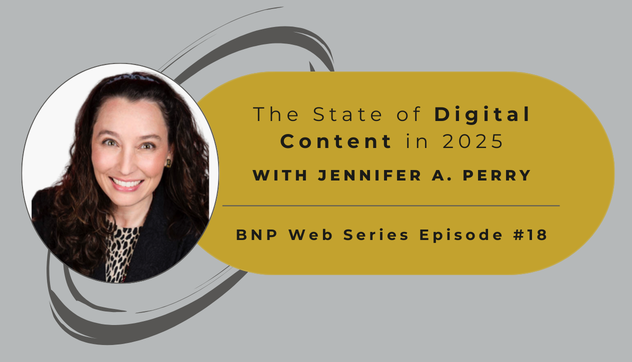
What does the state of digital content in 2025 look like, and how can independent authors prepare for what is next? In this episode of the B&N Press Web Series, Senior Manager for B&N Press, Julie Braunschweiger, is joined by Director of Digital eCommerce, Jennifer Perry, to discuss reader behavior, discoverability, metadata, and how authors can adapt their publishing strategies to stay visible and competitive.
Key Takeaways
● Digital reading behavior continues to evolve, with readers engaging across multiple formats and devices.
● Discoverability remains one of the biggest challenges for digital content in 2025.
● Metadata quality plays a critical role in helping readers find the right books.
● Authors should focus on long-term trends rather than short-term performance spikes.
● Flexibility across formats allows authors to meet readers where they are.
● Data and reader behavior should inform strategy, but creativity remains central.
● The future of digital content favors consistency, clarity, and reader-first thinking.
Transcription
Julie:
Hello everyone and welcome. Today we are talking about what is changing for digital content in 2025 and what authors should be thinking about as they plan ahead.
I am excited to be joined by Jennifer Perry, who brings deep insight into digital content strategy, reader behavior, and how platforms evolve alongside consumer habits. This is a timely conversation because digital reading continues to shift in ways that directly impact discoverability and long-term success for authors.
Jennifer, thank you so much for joining me.
Jennifer:
Thank you for having me. This is such an important topic, especially right now, when so many authors are trying to make sense of changing reader behavior and platform signals.
Julie:
Let’s start with the big picture. When you look at digital content heading into 2025, what stands out most to you?
Jennifer:
One of the biggest changes is how readers move fluidly across formats. Readers are not choosing ebooks or audiobooks exclusively. They are mixing formats depending on context, convenience, and lifestyle.
That means authors should think less about choosing one format and more about building flexibility into their publishing strategy.
Julie:
That connects closely to discoverability, which is something we hear about constantly from authors.
Jennifer:
Yes, discoverability is still the number one challenge. There is more content than ever, and readers rely heavily on search results, categories, recommendations, and metadata to find books that fit their interests.
Small changes to metadata can have an outsized impact on visibility. Authors who regularly review and refine their metadata tend to perform better over time.
Julie:
What kinds of mistakes do you see authors making when it comes to digital content strategy?
Jennifer:
A common mistake is reacting too quickly to short-term performance. A slow week does not mean something is wrong. Trends over time are much more meaningful.
Another issue is trying to chase every new trend. Authors do better when they stay consistent in genre, branding, and reader expectations, especially early in their careers.
Julie:
How should authors think about data in this environment?
Jennifer:
Data should be used as guidance, not pressure. It helps authors understand what is working and where there may be opportunities to improve.
The key is asking the right questions. Where are readers finding this book? What formats are performing best over time? Are readers continuing through a series?
Julie:
Are there specific areas authors should prioritize heading into 2025?
Jennifer:
Metadata and positioning should be at the top of the list. Clear categories, accurate descriptions, and consistent series information all support discoverability.
Authors should also think about their backlist as an asset. Older titles can perform very well when refreshed or reintroduced to new readers.
Julie:
What excites you most about the future of digital content?
Jennifer:
I am excited about how platforms are getting better at surfacing the right content to the right readers. As systems improve, authors who understand their audience and stay consistent will benefit.
There is still a huge appetite for stories. The challenge is making sure those stories can be found.
Julie:
Final thought. If you had to give authors one mindset shift going into 2025, what would it be?
Jennifer:
Think long-term. Focus on clarity, consistency, and reader experience. The authors who succeed are the ones who build sustainable strategies, not quick wins.
Julie:
That is the perfect place to end. Thank you so much, Jennifer, for sharing your insights, and thank you to everyone watching. We look forward to continuing these conversations throughout the year.
Editor’s Note: This transcript has been edited for clarity, length, and readability while preserving the intent and substance of the original conversation.


